What Is NDT? A Clear Guide to Nondestructive Testing in Aviation
A practical overview of nondestructive testing in aviation, explaining what NDT is, where it’s used in aircraft maintenance, and why it matters for safety, compliance, and operational reliability.
Nondestructive testing (NDT) is a group of inspection methods used to detect defects or material changes without damaging the aircraft part being inspected.
Quick definition: how NDT differs from destructive testing
Nondestructive testing (NDT) is a set of inspection methods that detect defects or material changes without damaging the part being tested.
Unlike destructive testing—where you cut, load to failure, or otherwise destroy a sample—NDT checks the actual part that returns to service.
In aviation, that preserves structural integrity, safety, and compliance while keeping aircraft and components in circulation.
For decision-makers, effective NDT reduces unscheduled removals, avoids unnecessary scrap, and supports lease compliance with traceable evidence—direct levers on cost and availability.
Where it matters most: fatigue-prone areas, high-load structures, landing gear, engine and nacelle elements, and critical components. NDT is built into maintenance programs and task cards across line maintenance, heavy checks, component overhaul, and end-of-lease redeliveries.
Common NDT methods
Other NDT families exist (e.g., visual testing (VT) and radiography (RT)), but in day-to-day airline/MRO work FPI, ET, MPI, and UT do most of the heavy lifting.
Fluorescent Penetrant (FPI): surface cracks made visible
What it does: Reveals surface-breaking cracks and defects using a dye that seeps into tiny openings and glows under UV light. Best for: Aluminum and other non-porous materials (skins, machined parts, castings). Aviation use: Surface cracks around fastener holes, doors, and access panels; post-repair verification. Process note: FPI requires controlled cleaning, dwell, removal, and developer steps under UV light; it’s typically done in-hangar or in shop, not on the open ramp.
Eddy Current Testing (ET/ECT): fast checks on skins, holes, and fasteners
What it does: Uses electromagnetic fields to detect surface and near-surface flaws (cracks, corrosion, thickness loss) in conductive materials. Best for: Aircraft skins, fastener holes, lap joints, blend-out checks. Aviation use: Rapid scans on-wing or in-hangar with minimal prep; ideal for repeat inspections with minimal disassembly when access allows. Ferromagnetic caveat: On ferromagnetic steels, ET sensitivity is limited by permeability; MPI is usually preferred.
Magnetic Particle (MPI): ferromagnetic parts under the microscope
What it does: Applies a magnetic field and iron particles to reveal discontinuities on or near the surface of ferromagnetic parts. Best for: Steel components such as landing-gear elements, engine mounts, and brackets. Aviation use: Detects cracks from cyclic loads and corrosion pits in critical gear. On-wing note: Portable yokes enable on-wing MPI where appropriate; ensure demagnetization and protection of nearby avionics/compasses are documented.
Ultrasonic (UT): internal flaws and thickness mapping
What it does: Sends high-frequency sound into a part and reads reflections to find internal cracks, delamination, or thickness changes. Best for: Thick structures, composites, bonded repairs, corrosion mapping. Aviation use: Structural inspections during C-Checks and redelivery projects when internal condition matters. Technique note: In metals, shear-wave or phased-array UT (PAUT) is common; in composites, through-transmission or PAUT is used. UT needs a couplant and has a near-surface dead zone on very thin skins. For large coverage or complex geometries, PAUT improves probability of detection and documentation quality.
Where NDT fits in aircraft maintenance
Line & A-checks: Quick ET/VT spot checks after events or alerts.
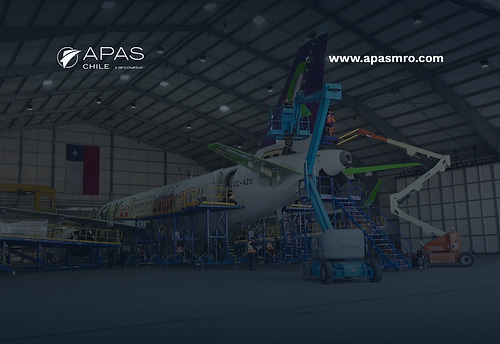
Heavy maintenance (C-Checks and structural packages): Planned FPI/MPI/UT across high-risk zones; NDT results feed directly into repair decisions.
Engines & nacelles: Borescope + targeted FPI/ET/UT for specific findings or service bulletins.
Component overhaul: In-shop NDT validates condition before repair, after blend-outs, and at return to service.
Lease transitions/redelivery: NDT supports contractual conditions and clean documentation for lessors.
Certifications that matter (aviation-grade compliance)
Operators and lessors look for recognized authorities and traceable methods. APAS Chile aligns NDT work with DGAC CMA-655 and FAA APAY048E, and also supports ANAC (Argentina), AFAC (Mexico), and IDAC (Dominican Republic). Decision-makers should also confirm personnel qualification to industry schemes (e.g., NAS 410/EN 4179) and currency of eye exams, training, and equipment calibration records. Multi-authority coverage reduces approval friction across jurisdictions and improves maintenance record acceptance.
The NDT workflow: from task card to report and repair
Task review & prep — Confirm the aircraft/component; reference the task card, SB/AD, and OEM specs.
Method selection — Choose FPI, ET, MPI, or UT per material, geometry, and required sensitivity.
Execution — Perform the inspection on-wing, off-wing, or in shop using calibrated equipment and current, approved technique sheets.
Evaluation & documentation — Record indications, evaluate against criteria, and issue traceable findings.
Repair support — Results flow to sheet metal/composites/engineering for immediate corrective action where needed.
Final report — Provide operator/lessor documentation suitable for audits and lease events (per MPD/SRM/OEM and applicable authority standards).
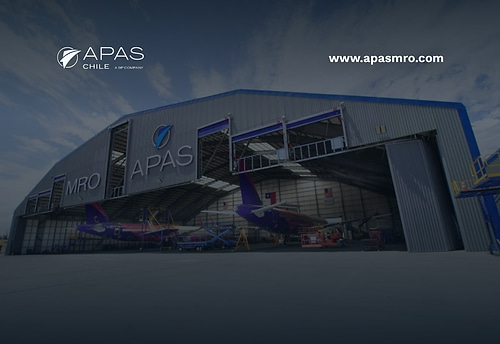
Why operators choose APAS Chile for NDT in Santiago
Four core methods in-house: FPI, ET, MPI, UT—available on-wing, in-hangar, or in shop.
On-airport integration: Inside Santiago International Airport (SCL/AMB) with dedicated NDT areas and immediate access to heavy maintenance bays and component shops; findings move to action fast, reducing TAT.
Certified technicians: Work aligned to DGAC/FAA and supported by ANAC/AFAC/IDAC.
End-to-end support: NDT embedded in structural repairs, engine inspections, component overhaul, and redeliveries.
Facility ecosystem: Bonded warehousing, sheet metal, composites, avionics, hydraulics, wheels and brakes—coordinated under one roof.
FAQs: quick answers about NDT
What does NDT stand for? Nondestructive testing—inspections that don’t damage the part.
Which methods are most common in aviation? FPI, ET, MPI, and UT for most routine aircraft and component work.
Can NDT be performed on-wing? Yes: ET/UT are common on-wing; MPI is possible case-by-case with portable yokes and proper demag; FPI is typically performed in-hangar or in shop due to processing steps. Access, coatings, and cleanliness may limit sensitivity; scope is confirmed at planning.
How long does an NDT job take? Depends on scope and access; integrated on-airport teams shorten lead time by eliminating extra moves.
What documentation do I receive? A traceable report with method, equipment, calibration, indications, evaluation, and disposition suitable for audits and lease transitions (images or scan maps included where applicable).
Which certifications should my provider have? Look for DGAC/FAA (and relevant regional approvals such as ANAC/AFAC/IDAC) with qualified personnel and calibrated equipment.
Do you support lease returns? Yes—NDT is built into redelivery checks and documentation packages.
Need Critical Parts Support—Now?
Our AOG response team is standing by 24/7 to source, quote, and dispatch the components you need.