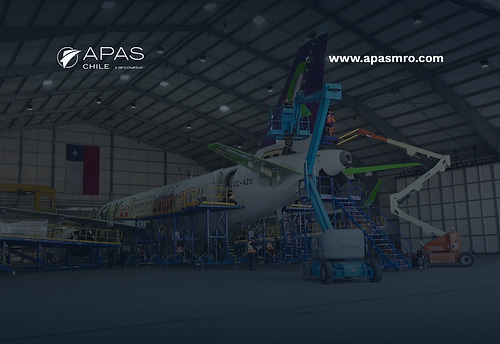
How Aircraft C-Check Maintenance Works: Scope, Timeline, and Planning
Learn what an aircraft C-check includes, how long it takes, what drives delays, and how planning improves turnaround time and fleet availability.
What is a C-check in aircraft maintenance, and why does it matter for fleet performance?
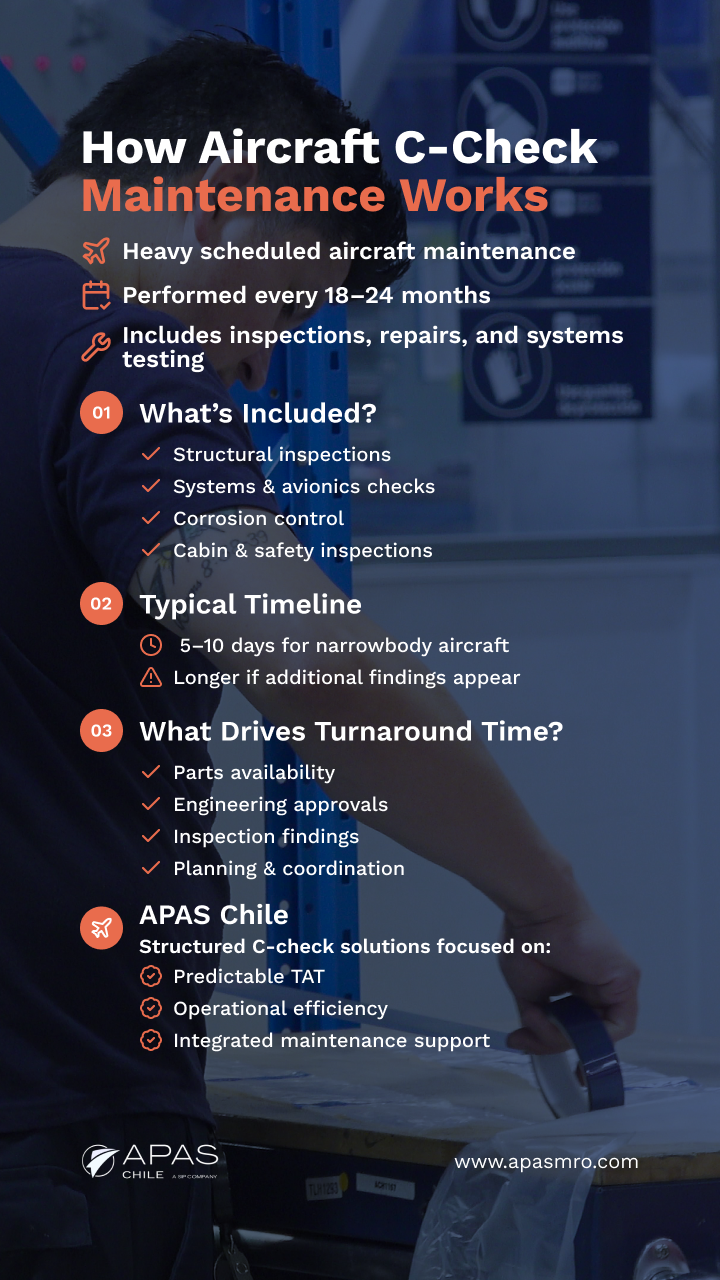
A C-check is a scheduled heavy maintenance event performed at defined intervals (typically every 18–24 months or flight-hour cycles), where an aircraft undergoes extensive inspection, systems testing, and structural evaluation.
Unlike line maintenance or A-checks, a C-check requires:
aircraft downtime (days to weeks)
hangar access
coordinated engineering, logistics, and labor planning
For operators, the C-check is not just a maintenance event—it is a critical operational and financial milestone that directly impacts fleet availability, cost control, and long-term airworthiness.
What Is Included in a C-Check?
A C-check is a comprehensive inspection package defined by the aircraft manufacturer’s maintenance planning document (MPD) and operator-specific programs.
It typically includes:
1. Structural inspections
Fuselage and wing inspection
Corrosion detection and treatment
Inspection of load-bearing structures
2. Systems and components
Hydraulic, pneumatic, and electrical systems checks
Functional testing of avionics and control systems
Replacement or servicing of time-controlled components
3. Cabin and interior
Cabin systems inspection
Emergency equipment verification
Interior condition and safety compliance
4. Zonal inspections
Area-based inspections across the aircraft
Wiring, tubing, and installation condition checks
Key point: A C-check is not defined by a single task—it is a bundle of hundreds to thousands of tasks, executed under a structured maintenance program.
How Long Does a C-Check Take?
C-check duration varies depending on aircraft type, scope, and findings.
Typical ranges:
Narrowbody (e.g., A320 / B737): 5–10 days (baseline)
Extended scope / findings: 10–20+ days
What drives C-check duration?
C-check timelines are primarily affected by:
Scope definition (MPD + additional work)
Findings during inspection (corrosion, damage, wear)
Parts availability and logistics
Engineering approvals (repairs, deviations)
Workforce planning and shift structure
Executive insight: Most delays are not caused by planned work—but by unplanned findings and supply chain gaps.
The C-Check Workflow: From Planning to Return to Service
A high-performing C-check follows a structured workflow:
1. Pre-Planning (30–90 days before induction)
Workscope definition (MPD + operator inputs)
Material planning and pre-ordering
Slot allocation and hangar scheduling
Engineering review of known issues
2. Aircraft Induction
Aircraft received into hangar
Initial inspection and condition verification
Opening of work packages
3. Inspection Phase
Execution of scheduled inspections
Identification of additional findings
NDT where required
4. Findings & Engineering
Assessment of defects
Repair vs replacement decisions
Use of OEM or DER-approved data when required
5. Execution Phase
Structural repairs
Component replacements
Systems servicing
6. Testing & Closure
Functional testing of systems
Final inspections and quality checks
Documentation and certification
7. Return to Service (RTS)
Release under Part 145
Full documentation package
Aircraft ready for operation
Why C-Check Planning Determines TAT
The difference between a 7-day vs 15-day C-check is rarely execution speed—it is planning quality.
High-performing MRO providers focus on:
Workscope accuracy: Reducing surprises during inspection
Material readiness: Ensuring parts are available before induction