Industry & Trends
The Future of A320 & 737 Maintenance in South America
Across South America, one truth quietly shapes almost every flight schedule: the region runs on narrow-body aircraft. The A320 and 737 families are the…

Industry & Trends
Across South America, one truth quietly shapes almost every flight schedule: the region runs on narrow-body aircraft. The A320 and 737 families are the…
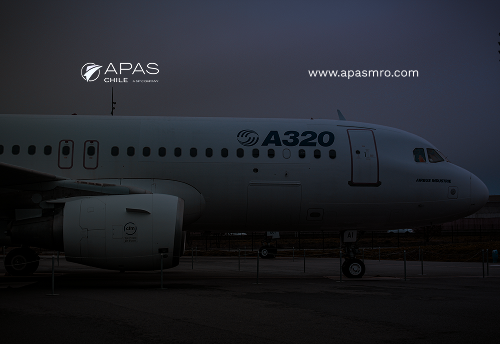
Across South America, one truth quietly shapes almost every flight schedule: the region runs on narrow-body aircraft. The A320 and 737 families are the workhorses that connect capital cities, link secondary routes, and make regional aviation economically viable. Their size, range, and operating economics fit the continent's geography and demand patterns almost perfectly — and that alignment is not going away any time soon.
For airlines, ground-handling teams, and maintenance organizations alike, this means the future of aviation in South America is, to a large degree, the future of A320 and 737 maintenance. Understanding where that future is heading is essential for anyone planning fleets, budgets, or capacity for the years ahead.
One of the clearest trends across the region is that aircraft are staying in service longer. When new deliveries are constrained and demand keeps recovering, operators lean harder on the aircraft they already have. Mature aircraft are reliable and well understood, but they also ask more of the maintenance system: more frequent heavy checks, more component overhauls, and more attention to structures, systems, and life-limited parts.
The practical effect is that maintenance is moving from a background cost to a strategic factor. Keeping a proven narrow-body flying safely and efficiently for additional years depends on having the right heavy-maintenance slots, component shops, and engineering support available when they are needed — not months later and not a continent away.
Post-pandemic, the global aviation supply chain has been under sustained pressure. Lead times for parts, components, and skilled labor have stretched, and demand for maintenance capacity has grown faster than the system has expanded. For South American operators, distance from major overseas MRO hubs magnifies the challenge: every aircraft ferried abroad for work means added cost, added downtime, and added risk of an AOG situation waiting on a part or a slot.
This is why regional maintenance capacity has become a competitiveness issue, not just a convenience. The operators best positioned for the coming years will be those with reliable access to maintenance close to home, backed by dependable logistics and inventory that shorten the gap between a problem and its solution.
A strong regional MRO base changes the equation for operators in several concrete ways:
This is precisely the gap APAS Chile is built to fill. As an integral MRO in Santiago (SCL) — combining heavy maintenance and C-checks, line maintenance, component shops for nacelles, wheels, brakes and hydraulics, NDT, engineering and quality under FAA and DGAC oversight, and AOG logistics backed by SIP Holding inventory — it offers South American operators a single, integral partner rather than a patchwork of scattered providers.

Aircraft only fly when qualified people keep them airworthy, and the region's biggest long-term constraint may be talent rather than tooling. As experienced technicians retire and fleets keep flying, the pipeline of trained maintenance professionals becomes a strategic asset. Regional training capability — such as a Part 147 Training Center — is what turns a one-time maintenance relationship into a durable regional ecosystem, developing the skilled workforce the continent's narrow-body fleets will depend on.
Sustainability is increasingly part of how maintenance is planned and delivered. Extending the useful life of proven aircraft, repairing and overhauling components rather than discarding them, and running efficient, well-managed shops all contribute to a lower-waste, more responsible operation. As environmental expectations grow, MRO practices that emphasize repair, reuse, and efficiency will move from good practice to standard practice.
The direction of travel is clear: the A320 and 737 will remain the backbone of the region for the foreseeable future, they will fly longer, and the maintenance system that supports them will need to be stronger, closer, and more integrated than ever. Operators who plan now for reliable regional MRO access — capacity, logistics, engineering, and talent together — will be the ones flying with the fewest surprises.
APAS Chile exists to be that regional partner. If you are planning how to keep your narrow-body fleet flying reliably in the years ahead, Contact us to talk about how integral MRO capacity in Santiago can support your operation.
Across South America the region runs on narrow-body aircraft, and the A320 and 737 families are the workhorses that connect capital cities, link secondary routes, and make regional aviation economically viable. Their size, range, and operating economics fit the continent's geography and demand patterns, and that alignment is not going away any time soon. To a large degree, the future of aviation in the region is the future of A320 and 737 maintenance.
One of the clearest regional trends is that aircraft are staying in service longer, as constrained new deliveries and recovering demand lead operators to lean harder on the aircraft they already have. Mature aircraft are reliable and well understood, but they ask more of the maintenance system: more frequent heavy checks, more component overhauls, and more attention to structures, systems, and life-limited parts. Maintenance is moving from a background cost to a strategic factor.
Post-pandemic, the global supply chain has been under sustained pressure, with stretched lead times for parts, components, and skilled labor. For South American operators, distance from major overseas MRO hubs magnifies the challenge, since every aircraft ferried abroad means added cost, downtime, and AOG risk. The operators best positioned for the coming years will be those with reliable access to maintenance close to home, backed by dependable logistics and inventory.
A strong regional MRO base offers shorter distances and downtime, integrated capability under one roof, faster AOG response through regional bonded warehousing and inventory, and local engineering and quality authority backed by recognized certifications. APAS Chile is built to fill this gap as an integral MRO in Santiago (SCL), combining heavy maintenance and C-checks, line maintenance, component shops for nacelles, wheels, brakes and hydraulics, NDT, engineering and quality under FAA and DGAC oversight, and AOG logistics backed by SIP Holding inventory. That gives operators a single, integral partner rather than a patchwork of scattered providers.
The region's biggest long-term constraint may be talent rather than tooling, as experienced technicians retire while fleets keep flying. Regional training capability such as a Part 147 Training Center is what turns a one-time maintenance relationship into a durable regional ecosystem, developing the skilled workforce the continent's narrow-body fleets will depend on. Planning for capacity, logistics, engineering, and talent together is what lets operators fly with the fewest surprises.
Our AOG response team is standing by 24/7 to source, quote, and dispatch the components you need.
Request a Quote Now